
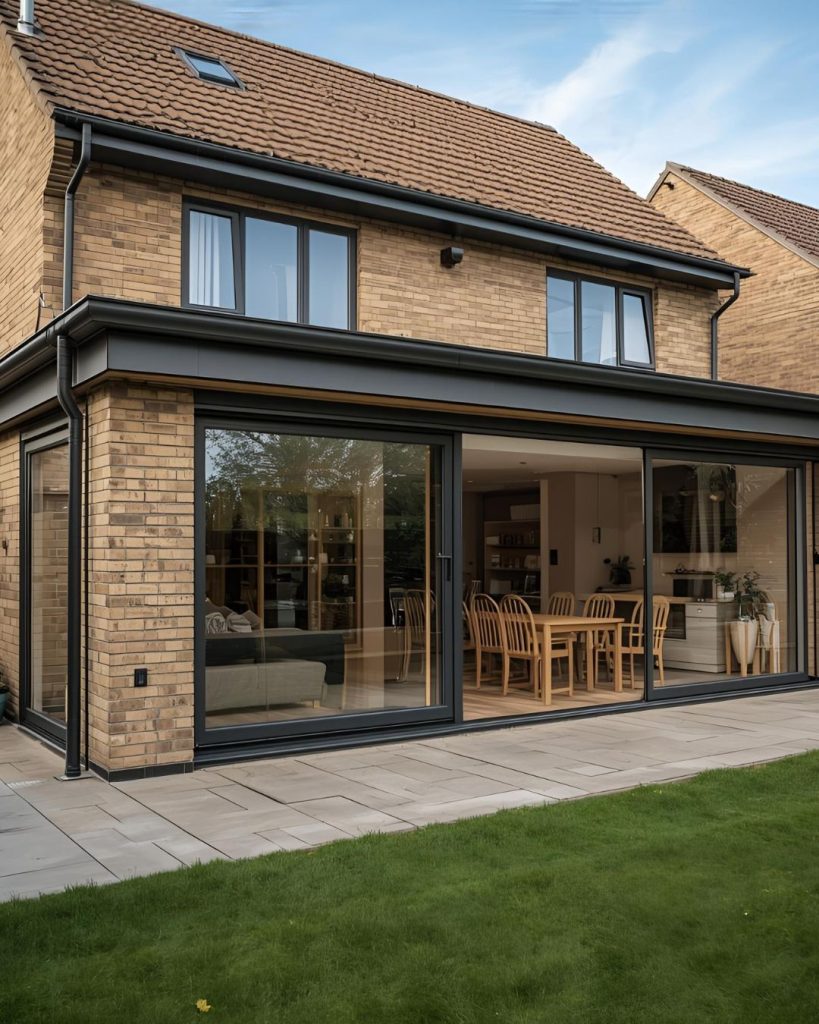
Single Storey Extension Ideas for Basildon Homes — Which Type Is Right for You?
A single storey extension is the most consistently requested building project across Basildon’s residential housing — and for good reason. The town was built as a new town from the early 1950s onward, planned around modest-sized post-war homes designed for a different era of household life. The original two and three-bedroom semis of Fryerns, Vange, Laindon and Pitsea were well built and well intentioned, but their layouts — compact kitchens separated from dining rooms, small ground floor footprints, rear gardens often larger than the ground floor they sit behind — were not designed for the way families cook, eat and live today.
The good news is that these same properties are often well suited to single storey extension work. Generous rear gardens with room to extend without losing usable outdoor space. Relatively straightforward ground conditions in most areas. Plots that in many cases sit on the edge of what was planned green space, giving room to extend on the side as well as the rear. Understanding which type of single storey extension suits your specific Basildon property — and what each involves in terms of structure, planning and cost — is the starting point before calling a builder.
This post covers the four main single storey extension types, matched to the specific property types and layouts most common across the Basildon area.
Rear Extension
A single storey rear extension is the most common extension type across Basildon — extending the footprint of the property straight out from the rear elevation into the garden. On the post-war semis and terraces of Fryerns, Ghyllgrove and the surrounding new town estates, the rear garden is typically deeper than the property’s ground floor footprint, making a rear extension the natural first option for adding space.
What It Involves
A rear extension requires new foundations at the perimeter of the new structure, structural walls or a steel frame depending on the span, a new roof — usually a flat or shallow pitched roof to keep below the eaves line of the existing house — and all services extended or repositioned within the new space. Where the extension connects to the existing kitchen and dining room, an opening is typically created in the rear wall of the original house to integrate the new and existing spaces. If that rear wall is load-bearing — common on the original development corporation builds — structural calculations and a steel beam are required.
Which Basildon Properties It Suits Best
The rear extension works well on virtually any Basildon semi or detached property where the garden has sufficient depth. Most of the post-war semis across Laindon, Pitsea and Vange have rear gardens of 12 metres or more — ample space for a meaningful single storey addition without leaving the garden compromised. On the smaller-plot terraces closer to the town centre and around the Basildon station area, garden depth is more limited and the decision about how much of the garden to sacrifice requires more careful consideration.
Planning
Most single storey rear extensions in Basildon fall within permitted development — no planning application required. Under Basildon Borough Council’s PD rules, the standard depth for a semi-detached house is 3 metres from the rear wall, extendable to 6 metres through the larger home extension scheme via prior approval. For detached properties the allowances are more generous — 4 metres standard, extendable to 8 metres. The clay subsoil underlying much of the Basildon area — the Thames estuary clay that affects ground conditions across south Essex — can affect foundation depth. On extensions close to mature trees, specialist foundation design may be needed to avoid root influence zones.
Side Return Extension
A side return extension fills in the gap alongside the property — the narrow passage that runs beside many of Basildon’s semi-detached and end-of-terrace properties between the flank wall of the house and the side boundary. On a standard Basildon new town semi, this gap is typically 1.5 to 2.5 metres wide. On its own it is dead space. Incorporated into the ground floor, it widens the kitchen significantly and improves the flow of the ground floor layout without taking any depth from the rear garden.
What It Involves
A side return extension is structurally simpler than a full rear extension in some respects — shorter spans, less new roofing area, often achievable without steelwork depending on the opening created into the existing kitchen. The main structural consideration is the roof junction between the new side extension roof and the existing rear slope of the main house. Getting this junction weathertight and structurally sound is where the quality of the builder matters most on this extension type.
Which Basildon Properties It Suits Best
The side return extension is most effective on properties where the kitchen and dining room are side-by-side rather than one behind the other — a layout common on many of the original development corporation houses across Fryerns and Kingswood. Widening the kitchen into the side return transforms the usable worktop and movement space without requiring any additional garden depth. It is less useful on properties where the kitchen already extends to the full width of the ground floor, or where the side passage is too narrow to create a useful addition.
Planning
Side return extensions on Basildon semi-detached properties typically fall within permitted development provided the addition does not extend beyond the principal elevation at the front and the height remains within the permitted limits. Party wall considerations are more relevant on side return extensions than on rear extensions — if the side boundary is close to or shared with a neighbour’s fence or structure, the Party Wall etc. Act 1996 may apply. We confirm the position at the survey stage.
Wrap-Around Extension
A wrap-around extension combines a rear extension with a side return addition, creating an L-shaped addition across the full rear and side of the property. The result is the most significant ground floor transformation available from a single storey addition — and the one that most consistently changes how a Basildon semi functions as a family home.
What It Involves
The structural scope of a wrap-around is more involved than either a rear or side return extension alone. The roof junction where the rear extension meets the side return — typically a valley or a flat roof connection — requires careful structural design and weatherproofing. The rear wall of the original house and in many cases the flank wall are opened up significantly, typically requiring steel beams at both junctions. The result, when done well, is a ground floor that opens directly from the original reception room through a completely reconfigured kitchen and dining space to the rear garden — with the side and rear additions creating the kind of flowing ground floor layout that modern new builds deliver as standard.
Which Basildon Properties It Suits Best
The wrap-around is most suited to corner plots and end-of-terrace properties where both the rear and the side offer space for the addition without encroaching on neighbouring boundaries. End-of-terrace properties across the Laindon and Langdon Hills areas — where plots tend to be more generous on the end-of-row houses — are consistently the best candidates. Standard semi-detached properties mid-terrace are more constrained on the side return element, and the wrap-around becomes more viable where the side passage is at least 1.5 to 2 metres wide.
Planning
A wrap-around on a Basildon semi almost always requires a full planning application with Basildon Borough Council rather than relying on permitted development. The combined volume of the rear and side addition typically exceeds the PD allowances for semi-detached houses. Basildon Borough Council’s determination period runs eight weeks from a valid application. We manage the application as part of the project where required.
Infill Extension
An infill extension fills in an existing recess or recessed area of the ground floor — typically the space beneath a projecting first floor bay or bedroom, or a covered but unenclosed area such as a car port or open porch that sits within the existing footprint of the building. Rather than extending beyond the existing perimeter, the infill uses space that is already within the building’s outline but currently unenclosed.
What It Involves
An infill extension is often the simplest and least expensive single storey addition available — the new structure sits within an existing recess rather than projecting into new ground. Foundations may already exist at the perimeter of the recess from the original build. The roof connects to the existing structure above without creating a new junction in the main roof. Services are extended into the enclosed space rather than run to a new external position.
Which Basildon Properties It Suits Best
Infill extensions are most relevant on Basildon properties where there is an existing recess — a recessed front entrance, an open-fronted integral garage, or a ground floor footprint with a setback area that could be enclosed. On some of the later development corporation builds from the late 1960s and 1970s — where design experimentation created more varied layouts — infill opportunities are more common than on the standard early 1950s semis. An infill on the rear of a property that has a projecting first floor bedroom above the kitchen can also add useful kitchen space without any complex structural work.
Planning
Infill extensions that sit within the existing footprint of the building are often the most clearly within permitted development. Because the new structure does not extend beyond the existing perimeter of the house, the PD volume calculations are less constraining. We confirm the planning position for each property at the first visit.
Which Type Is Right for Your Basildon Property?
The right extension type depends on your property’s layout, your garden size, your budget and what you actually want to achieve on the ground floor. A rear extension adds depth. A side return adds width. A wrap-around adds both. An infill uses existing space more efficiently.
For most Basildon homeowners on the post-war semi estates — the most common property type across the town — a single storey rear extension combined with an open-plan conversion of the existing kitchen and dining room is the project that delivers the most consistent transformation. A rear extension of 3 to 5 metres combined with an opening created in the existing rear wall typically adds between 15 and 30 sqm of usable floor area and converts a divided, undersized ground floor into a connected kitchen and living space.
If you are planning a single storey extension on a Basildon property and want to understand which option suits your specific house and plot, get in touch and we will come out to take a look. Get in touch to arrange a visit.